

You’ve watched your dog shake under the kitchen table during a thunderstorm and wished there was something you could do that didn’t require a prescription. You’ve watched the limp that used to come and go become the limp that stays. You’ve heard about CBD chews from the woman at the dog park, from your daughter, and from a sponsored ad on a podcast you don’t even like. You came here to find out if any of it is real before you spend money on a treat that might do nothing.
This guide walks you through what the actual veterinary research shows about CBD for dogs, what dose to start at by weight, what to look for on a label, and which form — chew, tincture, or topical — makes sense for which problem. Written by John Adams, a Wyoming rancher and 30-year U.S. healthcare veteran who has run more dogs through working life and old age than most people ever will.
The strongest peer-reviewed evidence for CBD in dogs comes from Cornell’s 2018 osteoarthritis trial: 2 mg of CBD per kilogram of body weight, given orally twice daily for four weeks, significantly decreased pain and increased activity in dogs — with no clinically significant adverse effects.
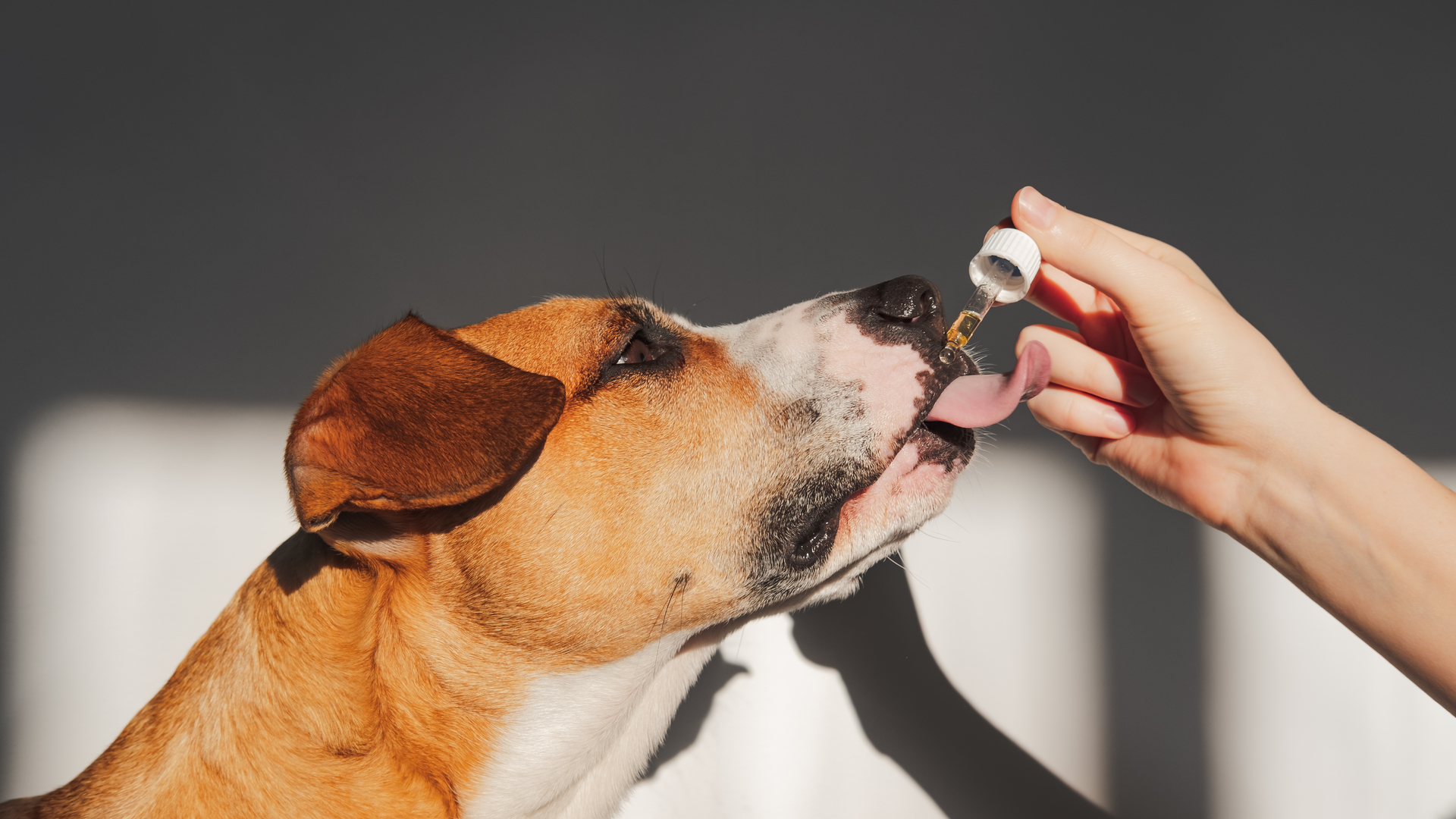
The Science: What CBD Actually Does in a Dog’s Body
Dogs have an endocannabinoid system, just like we do — a network of receptors that helps regulate pain, inflammation, mood, and sleep. CBD (cannabidiol) is a non-intoxicating compound from the hemp plant that interacts with that system. It will not get your dog high. THC will, which is the single most important reason every CBD product you give a dog must be either THC-free or so trace-low it does not register at a dog’s body weight.
Important distinction: THC at any meaningful dose is genuinely toxic to dogs. The ASPCA Animal Poison Control Center fields thousands of calls a year about dogs that got into someone’s marijuana edibles. CBD is not that. They are different compounds, and a properly made broad-spectrum CBD product for pets is THC-free.
The clearest peer-reviewed evidence on CBD in dogs to date comes from a small but well-run set of studies:
- Cornell University (Gamble et al., 2018, Frontiers in Veterinary Science): Dogs with osteoarthritis given 2 mg/kg of CBD twice daily for four weeks showed significantly decreased pain and increased activity. No clinically significant adverse effects. This is the study that put canine CBD on the veterinary map.
- Waltham Petcare Science Institute (Hunt et al., 2023, Frontiers in Veterinary Science): A single oral dose of THC-free CBD lowered measurable stress markers in dogs subjected to car travel and short-term separation — less whining, lower cortisol, calmer behavior on objective measures.
- Colorado State (McGrath et al., 2019, Journal of the American Veterinary Medical Association): CBD reduced seizure frequency in dogs with treatment-resistant idiopathic epilepsy when added on top of standard anti-seizure medication.
That is meaningful evidence in a category where most products on the shelf have none. It is also not infinite evidence — long-term use, breed-specific differences, and interactions with common veterinary medications still need more study. Any honest vet will tell you the same.
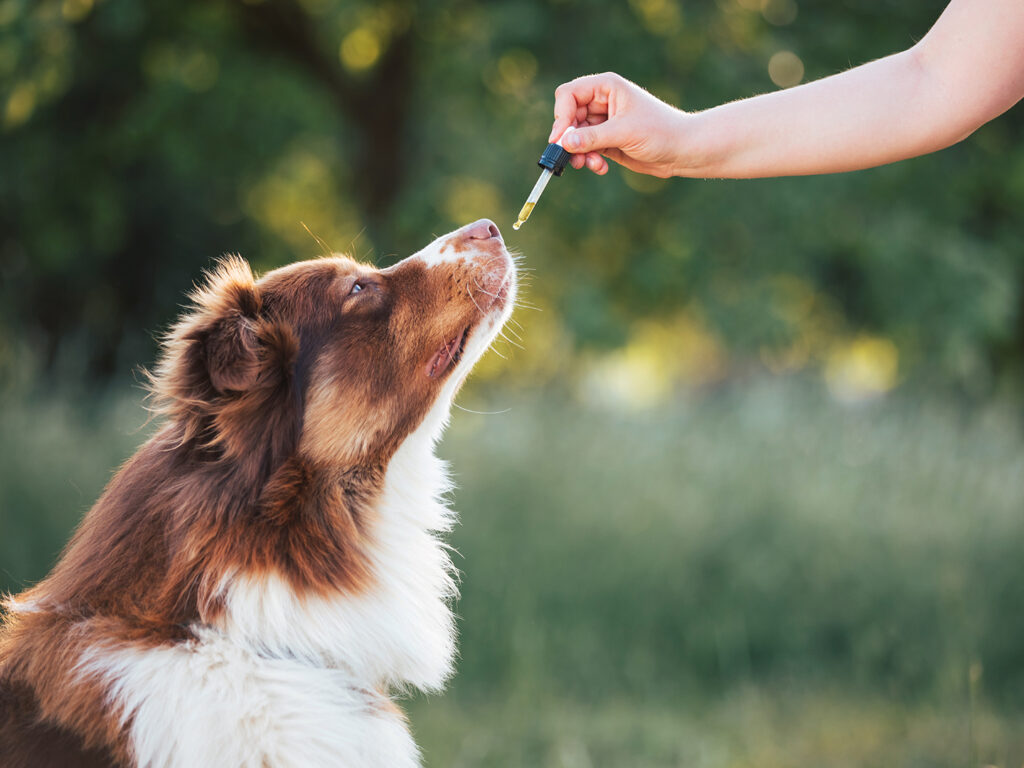
The Soothe Approach
We do not run a separate “pet line” made from leftover hemp. The CBD that goes into our pet chews is the same USDA Certified Organic, third-party tested broad-spectrum extract that goes into our human tinctures. The certificates of analysis are published on our site. Every batch.
What’s different about the pet products is the carrier and the dose: peanut-butter chews dogs actually want, milligrams that match a dog’s body weight, and zero THC. Broad-spectrum CBD (cannabidiol plus the supporting cannabinoids and terpenes from the hemp plant, with the THC removed) gives most dogs the benefit of the entourage effect without the THC question.
John built Soothe because his own family needed CBD they could trust. The pet line exists because the same standard should apply to the dog who sleeps at the foot of the bed.
Practical Guidance: Dose, Timing, and Form
The dose used in the Cornell osteoarthritis study was 2 mg of CBD per kilogram of body weight, twice daily — the strongest evidence-based number we have for dogs in real pain. For everyday anxiety, most dogs respond at less than that.
The simple rule we give:
- General use / mild anxiety: 0.2 mg per pound of body weight, once or twice daily.
- Moderate anxiety or joint stiffness: 0.5 mg per pound, twice daily.
- Vet-confirmed osteoarthritis or chronic pain: up to 1 mg per pound, twice daily — this lines up with the Cornell protocol when converted from kilograms.
Start at the low end. Hold for one full week. If you see what you were hoping to see — calmer car rides, easier stairs, less scratching — you found your dose. If you do not, increase by about 25% and hold another week. Do not exceed 1 mg per pound twice daily without your vet involved.
For situational anxiety (fireworks, vet visits, long drives), give a single dose 60 to 90 minutes before the trigger. Onset is faster with a tincture (15 to 45 minutes) than a chew (45 to 90 minutes), so for the Fourth of July, a tincture is the better tool.
.

Starting Dose by Body Weight
|
Dog’s weight |
Starting daily total |
Moderate range |
Pain-protocol ceiling |
|
10 lb |
2 mg |
5 mg |
10 mg |
|
25 lb |
5 mg |
12 mg |
25 mg |
|
50 lb |
10 mg |
25 mg |
50 mg |
|
75 lb |
15 mg |
37 mg |
75 mg |
|
100 lb |
20 mg |
50 mg |
100 mg |
Which Form for Which Problem
|
Form |
Best for |
Onset |
Duration |
Pro tip |
|
Peanut-butter Chew |
Daily anxiety, joint maintenance, dogs who eat treats |
45–90 min |
6–8 hrs |
Easiest to dose; 2 mg of CBD per chew, so use the chart above to work out how many |
|
Pet Tincture |
Situational anxiety, picky eaters, precise dosing |
15–45 min |
4–6 hrs |
Drop into cheek pouch 60–90 min before fireworks |
|
Topical Cream |
Hot spots, paw irritation, localized soreness |
Localized |
Topical only |
Distract or cone the dog for 10 min so it doesn’t lick it off |
What you will not get from us: gummies for dogs. Gummies have sugar and citric acid that do dogs no favors, and “CBD gummies for pets” is mostly a marketing phrase that exists because gummies sell to humans. Use the chew.

Who This Guide Is For (and Who It Isn’t)
For: owners of generally healthy dogs dealing with situational anxiety (storms, separation, travel), age-related joint stiffness, or mild skin irritation.
Check with your vet first if any of the following apply:
- Your dog is on prescription medications — especially anti-seizure drugs, NSAIDs, or anything metabolized through the liver. CBD shares cytochrome P450 pathways with many drugs and can change how they work.
- Your dog is pregnant or nursing.
- Your puppy is under 6 months old. The endocannabinoid system is still developing.
- Your dog has diagnosed liver disease. CBD can elevate liver enzymes; your vet should monitor.
- You have a cat. Cats metabolize CBD differently — do not give a dog product to a cat. We have a separate guide for cats.
Frequently Asked Questions
How much CBD should I give my dog?
Start at 0.2 mg per pound of body weight, once or twice daily. For a 25-pound dog, that’s about 5 mg total per day; for a 50-pound dog, 10 mg; for a 75-pound dog, 15 mg. Hold the dose for one full week before judging it. If you see what you were hoping to see — calmer car rides, easier stairs, less scratching — that’s your dose. If not, increase by about 25% and hold another week. The dose used in the Cornell osteoarthritis study (2 mg per kilogram, twice daily) is the upper end of normal use for dogs in real, vet-diagnosed pain.
How long does it take CBD to work in dogs?
For a tincture, you’ll usually see the first effects in 15 to 45 minutes, with the peak around an hour. Chews take longer to come on (45 to 90 minutes) but last longer too. For situational anxiety like fireworks or a vet visit, give the dose 60 to 90 minutes ahead of time. For day-to-day anxiety or joint stiffness, give it consistently for at least a week before you decide whether it’s working — most of the benefit shows up gradually as the cannabinoid builds steady-state in the dog’s system.
Will CBD make my dog sleepy or “stoned”?
No, not at the doses we recommend. CBD is non-intoxicating — it does not produce the high that THC does. THC is what is dangerous to dogs, and our pet products are THC-free. The most common side effect of CBD in dogs is mild drowsiness, and only when the dose is too high. If your dog seems sluggish after starting CBD, the dose is too high — back it down by about 25% and the drowsiness should resolve within a day or two.
Is CBD safe for older dogs?
Yes, and older dogs are one of the populations CBD has been studied most carefully in, because osteoarthritis is so common in seniors. The Cornell trial specifically included older dogs. The cautions to watch for are the same ones you would ask the vet about for any aging animal: liver enzyme monitoring (especially with a history of liver disease) and interaction with any prescriptions the dog is already on. A short conversation with your vet before you start is worth the time.
Can I give my dog the same CBD I take?
Only if the human product is THC-free, xylitol-free, and you are dosing it carefully by weight. The CBD molecule is the same. The risks are real: many human gummies contain xylitol, which is acutely toxic to dogs even in small amounts; many human tinctures contain a low level of THC that is fine for an adult human but too much for a 30-pound dog. If you are going to share, share a clean broad-spectrum tincture and dose by weight. A pet-specific chew is easier and safer.
One Last Thing
Start small. Watch your dog for a week. Adjust if you need to. That is the whole protocol.
When you’re ready, our CBD Chews for Dogs (2 mg of CBD per peanut-butter chew) are the product we recommend most often for daily anxiety and joint maintenance. Our pet tincture is the right tool when you need fast onset for fireworks, a vet visit, or a long drive. Both are USDA Certified Organic, broad-spectrum, third-party tested, and backed by our 60-day money-back guarantee — if your dog does not get something out of it, send it back for a full refund. We mean that.
If you want to talk it through before ordering, write us through the contact page on sootheorganic.com. A real person will answer.
Written by John Adams, founder of Soothe Organic. Wyoming rancher, 30-year U.S. healthcare veteran. Reviewed for accuracy May 2026.
Soothe Organic is not a medical provider. For informational purposes only. Always consult your healthcare provider before adding CBD to your wellness routine.


